If your water heater is nearing the end of its lifespan, or you’re tired of running out of hot water mid-shower, you’ve probably heard about tankless water heaters. The promise sounds pretty good: endless hot water, lower energy bills, and a unit that lasts twice as long as the tank sitting in your basement right now. But they also cost more upfront, sometimes a lot more. So are tankless water heaters actually worth it?
As licensed plumbers who’ve installed both tank and tankless systems in hundreds of homes in Issaquah, Maple Valley, and Fall City, we get this question constantly. The honest answer: it depends on your situation. For some homeowners, switching to tankless is one of the best upgrades they’ll make. For others, a quality tank water heater makes more sense. Here’s everything you need to know to make the right call for your home.

How Tankless Water Heaters Actually Work (And Why It Matters)
Let’s start with the basics, because understanding how these systems work explains why they save energy and last longer.
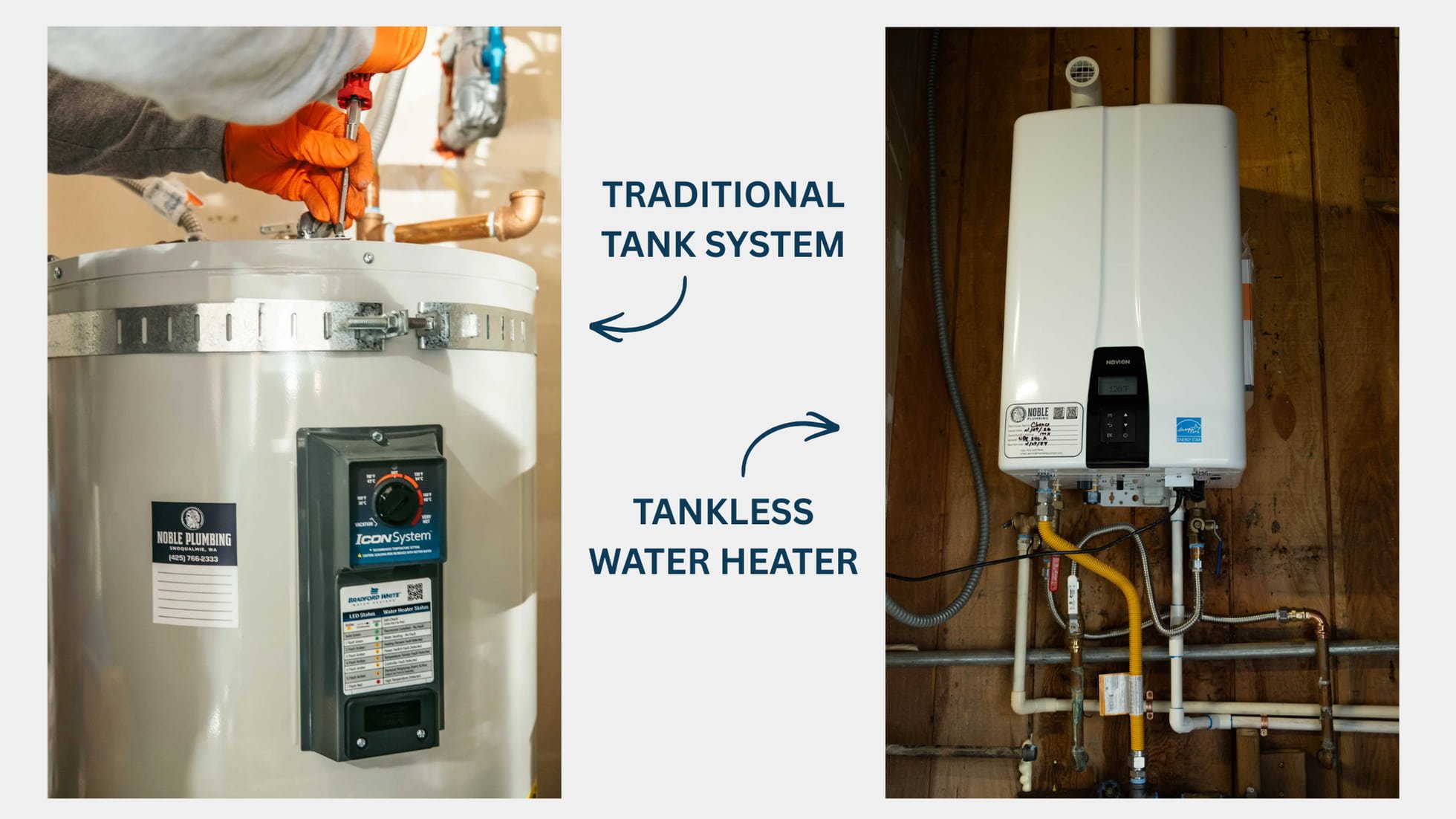
Traditional storage tank water heaters store 30-80 gallons of hot water in an insulated tank, keeping it warm around the clock. When you turn on a hot water tap, hot water flows from the tank into your pipes, and then cold water refills the tank so it can be heated again.
The problem? Your water heater is burning gas or electricity 24/7 to keep that tank hot, whether you’re using the water or not. This “standby heat loss” wastes water heating. Plus, once you drain the tank during back-to-back showers, you’re stuck waiting 30-60 minutes for it to reheat.
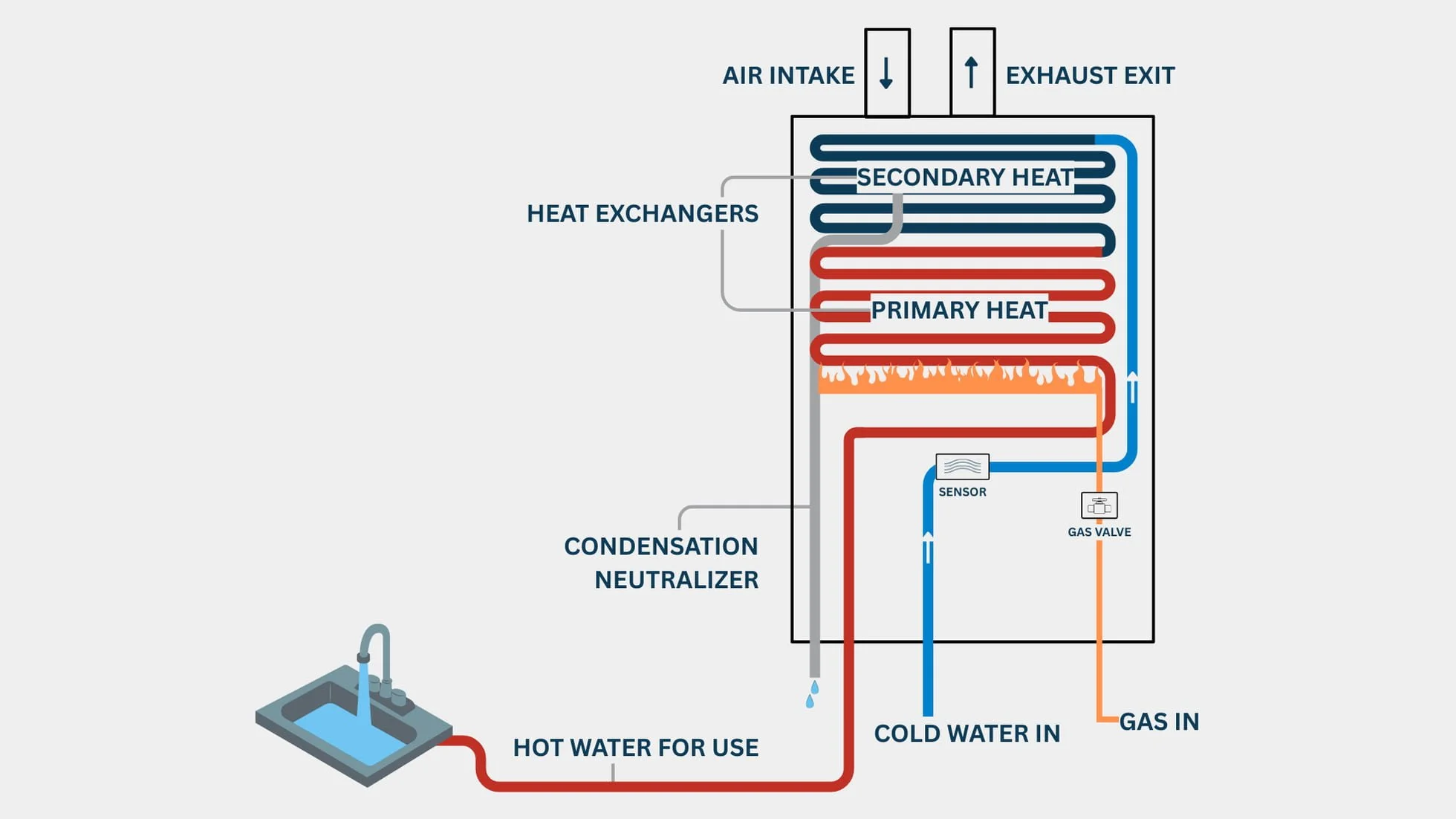
Tankless water heaters are different. Instead of storing hot water, they heat it on demand. When you turn on a hot water tap, water enters the tankless heater, and a gas burner (or electric heating element) instantly heats it to your desired temperature. The hot water keeps flowing as long as you need it.
No storage tank means no standby heat loss. No 40-gallon capacity limit means no running out of hot water. It’s a fundamentally different approach that eliminates the two biggest frustrations with tank water heaters.
The Real Benefits of Switching to Tankless
Let’s talk about what you actually get when you upgrade to a tankless system. Some of these benefits are obvious; others might surprise you.
1. You’ll Never Run Out of Hot Water Again
This is the benefit everyone cares about, and it’s real. With a properly sized tankless system, you get continuous hot water whenever you need it. Two people can shower simultaneously while the dishwasher runs, and you won’t lose temperature or pressure.
This matters most for families with teenagers (who take 20-minute showers), homes with multiple bathrooms, and anyone who’s ever had to schedule showers around the water heater’s recovery time. If you’ve got a big soaking tub or hot tub, tankless is pretty much the only way to fill it without draining your entire tank.
One caveat: sizing matters. An undersized tankless unit will struggle when demand reaches its maximum. This is why you need an experienced plumber to calculate your household’s peak flow rate (measured in gallons per minute) and temperature rise requirements. Cut corners here, and you’ll be disappointed.
2. Your Energy Bills Will Drop (Significantly Over Time)
According to the U.S. Department of Energy, tankless water heaters are 24-34% more energy-efficient than conventional tank heaters for homes that use 41 gallons or less of hot water daily. For larger homes using over 80 gallons per day, they’re still 8-14% more efficient.
Why the savings? Tankless units only fire up when you’re actually using hot water. No keeping 50 gallons hot at 3 AM when everyone’s asleep. That eliminated standby loss translates to lower gas or electric bills every single month.
In Western Washington’s climate, most households save $100- $200 annually with a gas tankless system or $50- $100 with an electric one. That might not sound life-changing, but over a 20-year lifespan, you’re looking at $2,000 to $4,000 in energy savings. Factor that into your cost-benefit analysis.
3. They Last About Twice as Long as Tank Heaters
Tank water heaters typically last 8-12 years. If you’re lucky, maybe 15. Tankless systems can hit 20-25 years with proper maintenance. You’ll replace a tank water heater two or three times during the lifespan of a tankless unit (see this Consumer Reports article).
The reason comes down to how they fail. Tank heaters die because the steel tank corrodes from the inside out. Once the anode rod, basically a sacrificial metal rod that attracts corrosion, depletes, the tank itself starts rusting. Eventually, you get leaks, then catastrophic failure, then a flooded basement.
Tankless systems don’t store water, so there’s no tank to corrode. The heat exchanger (usually stainless steel or copper) lasts much longer when you keep up with annual maintenance, which brings up an important point: tankless isn’t maintenance-free. You should have it flushed and descaled every year, especially in areas with hard water, such as parts of King County. That annual service runs $150-$200 and is genuinely worth it.
4. They Free Up Valuable Space
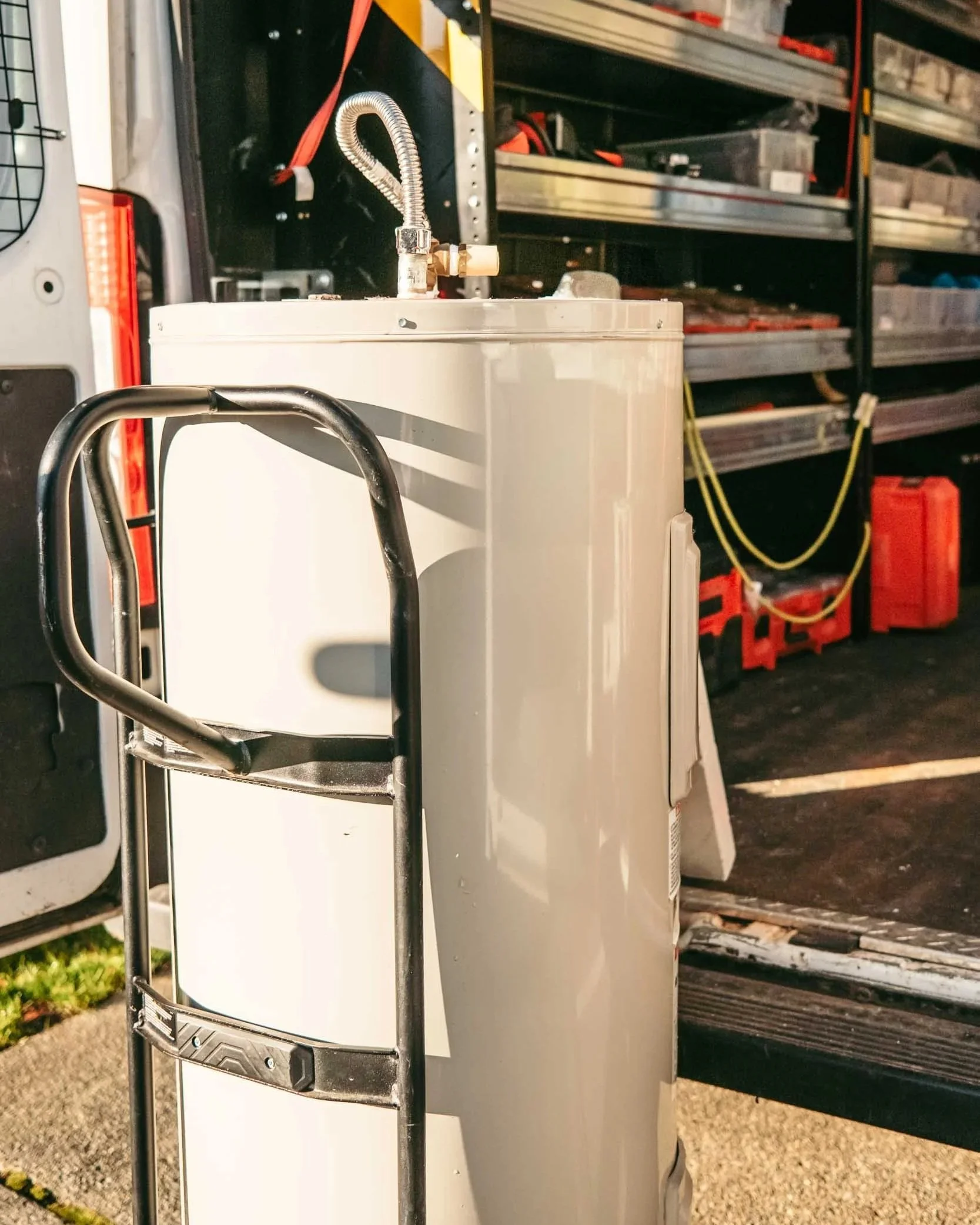
A 50-gallon tank water heater takes up about 2 feet in diameter and 5 feet in height. It sits on your floor, taking up space you could use for storage, laundry, or converting to a living area.
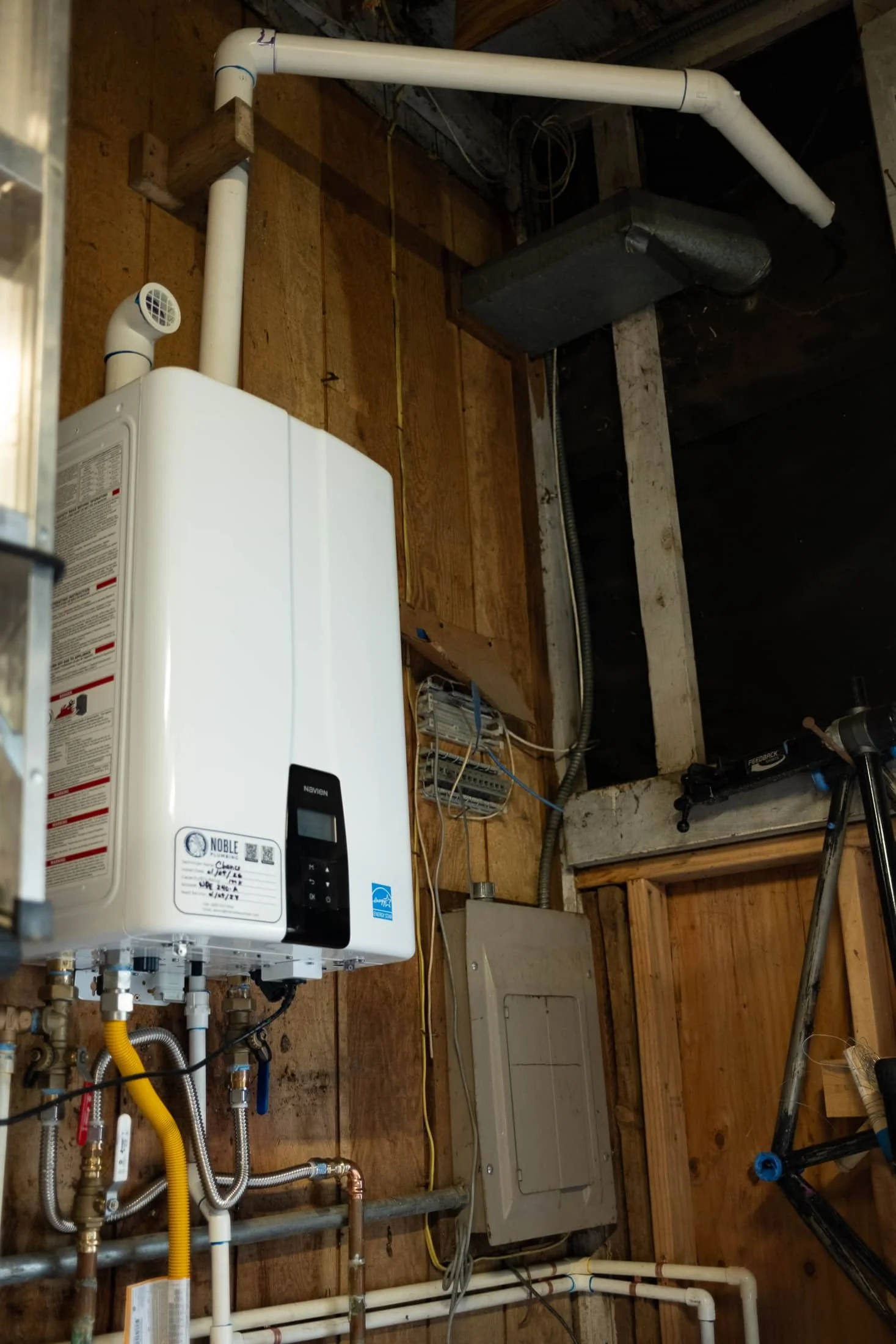
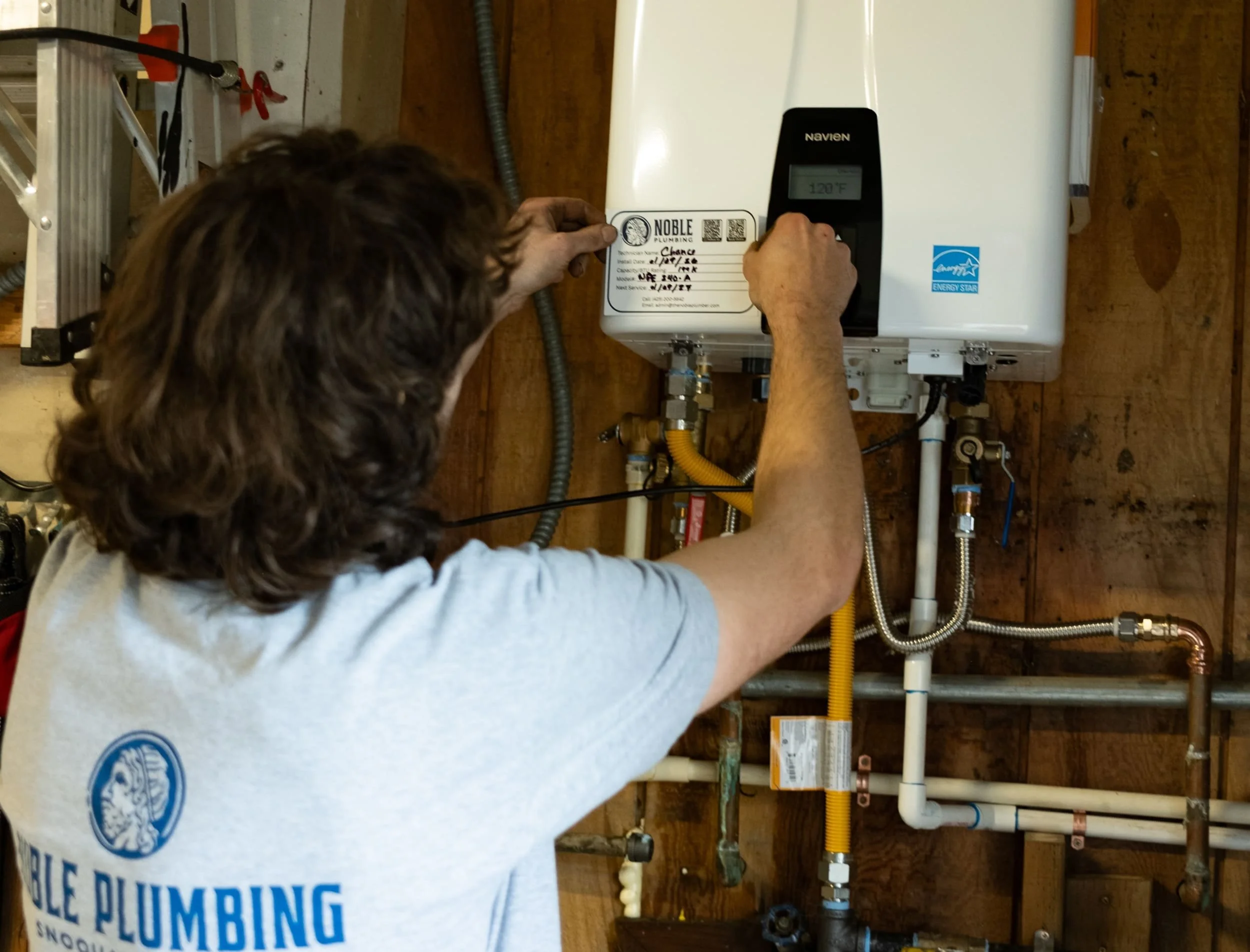
A tankless unit is about the size of a carry-on suitcase and mounts on the wall. If you’ve got a smaller home, a condo, or you’re finishing a basement or garage, reclaiming that floor space can actually matter. We’ve had clients switch to tankless water heaters specifically because their water heaters were in a bedroom closet or a hallway. Replacing it with a wall-mounted unit gave them the closet back.
5. Way Lower Risk of Catastrophic Water Damage
Here’s something most people don’t think about until it happens to them: when a 50-gallon water heater tank fails, all 50 gallons go somewhere. Usually, your basement, garage, or utility room floor. Sometimes it’s a slow leak that saturates everything nearby. Sometimes the tank just ruptures, flooding the space in minutes. According to insurance industry data, the average water heater flood causes $4,000 to $10,000 in damage to flooring, drywall, stored items, and adjacent rooms. And that’s if you catch it relatively quickly.
Tankless systems don’t store water, so catastrophic flooding basically can’t happen. You might get a small leak at a connection point, but not 50 gallons on your floor.
6. Rebates and Tax Credits Lower the Upfront Cost
Washington State utilities and the federal government want you to install energy-efficient equipment, so they’ll help pay for it. Current incentives include:
Puget Sound Energy (PSE): Up to $300 rebate for qualifying gas tankless water heaters
Seattle City Light: Up to $800 rebate for heat pump water heaters
Federal Tax Credits (2026): Up to $600 for qualifying energy-efficient home improvements, including tankless water heaters under the Energy Efficient Home Improvement Credit
These programs change yearly, so check with your utility provider when you’re ready to install. But right now, rebates can knock $300-$800 off your installation cost.
The Downsides of Tankless
Tankless isn’t perfect for every situation. Here’s what you should know before you commit.
1. Higher Upfront Cost
A standard 50-gallon tank water heater installation runs $1,200-$2,500, including the unit and labor. A tankless installation costs $3,500-$6,500. That’s not a small difference. Why does tankless cost more? The units themselves are pricier ($1,000-$2,500 vs. $400-$900). Installation takes longer and requires more expertise. And you might need infrastructure upgrades, which we’ll talk about in a minute.
The good news: energy savings of $100-$200 per year and a 20-year lifespan (versus 10-12 years for tank heaters) offset that higher cost over time. But you need to stay in your home long enough to see those savings.
2. Your Home Might Need Upgrades
Switching from a tank to a tankless system sometimes requires upgrading your home's infrastructure. Whether you need these depends on your specific setup:
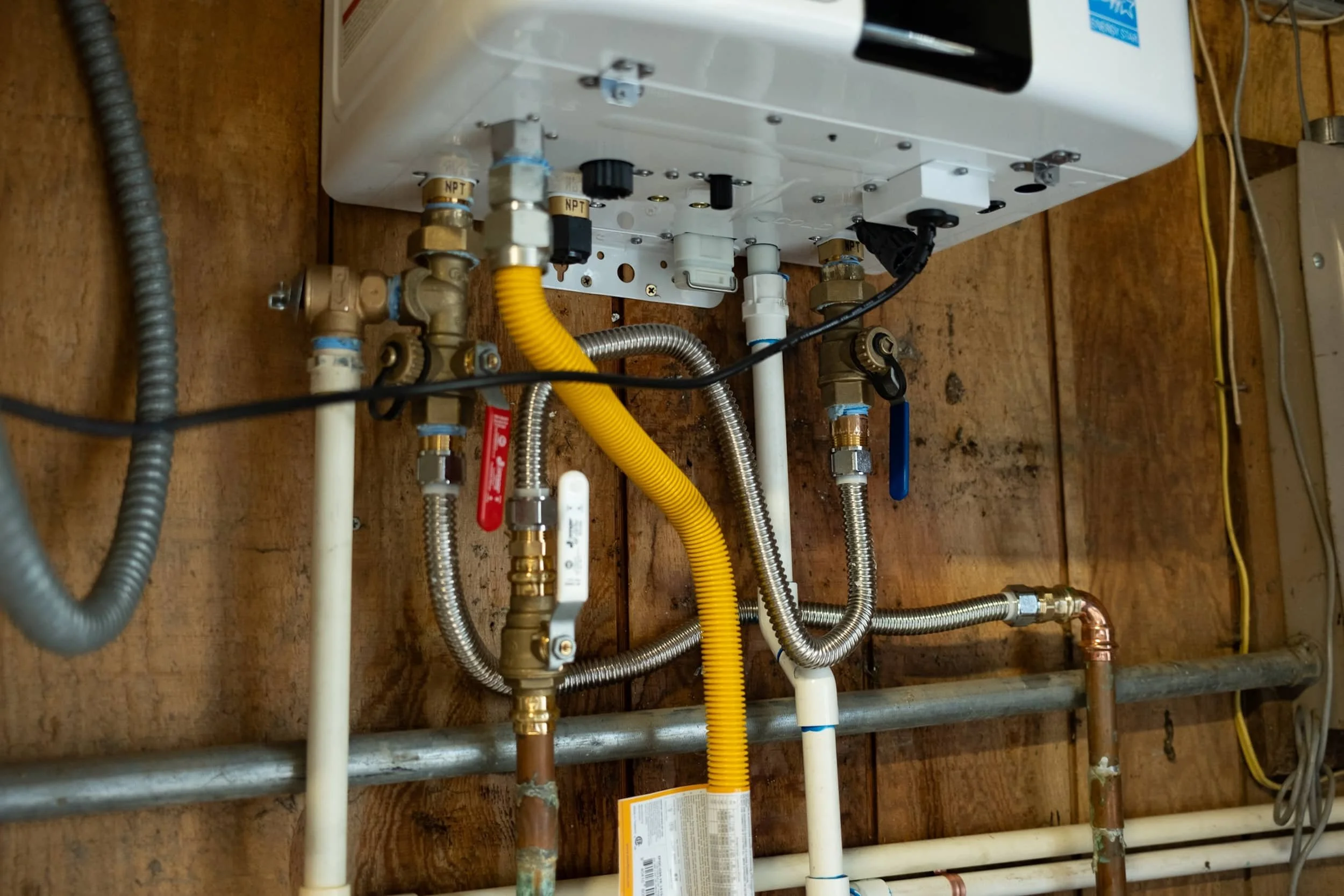
Gas line upgrades ($500-$1,500): Tankless gas heaters need 150,000-200,000 BTU of gas input, compared to 30,000-40,000 BTU for tank heaters. Your existing 1/2” gas line might need to be upsized to 3/4” or larger.
Tankless Examples
Rinnai Product Specs -RU199iN model page - Shows their top models at 199,000 BTU.
Navien NPE-240A2 Specs -Official product page - 199,900 BTU max input
Noritz High-Capacity Models -Ferguson product listing - NRC111 at 199,900 BTU
Tank Examples
Rheem Professional Classic -Southern Pipe product page - 40-gallon tank at 40,000 BTU/H
AO Smith ProLine -AF Supply page - 40,000 BTU tank heater
Navien Sizing Guide - Official manufacturer guide explaining BTU requirements. Plumber’s Stock Tankless Sizing - Industry resource explaining the difference
Electrical work ($200-$1,000): Even gas tankless units need a 120V outlet for the electronic controls. If there’s no outlet near the installation spot, you’ll need to add wiring.
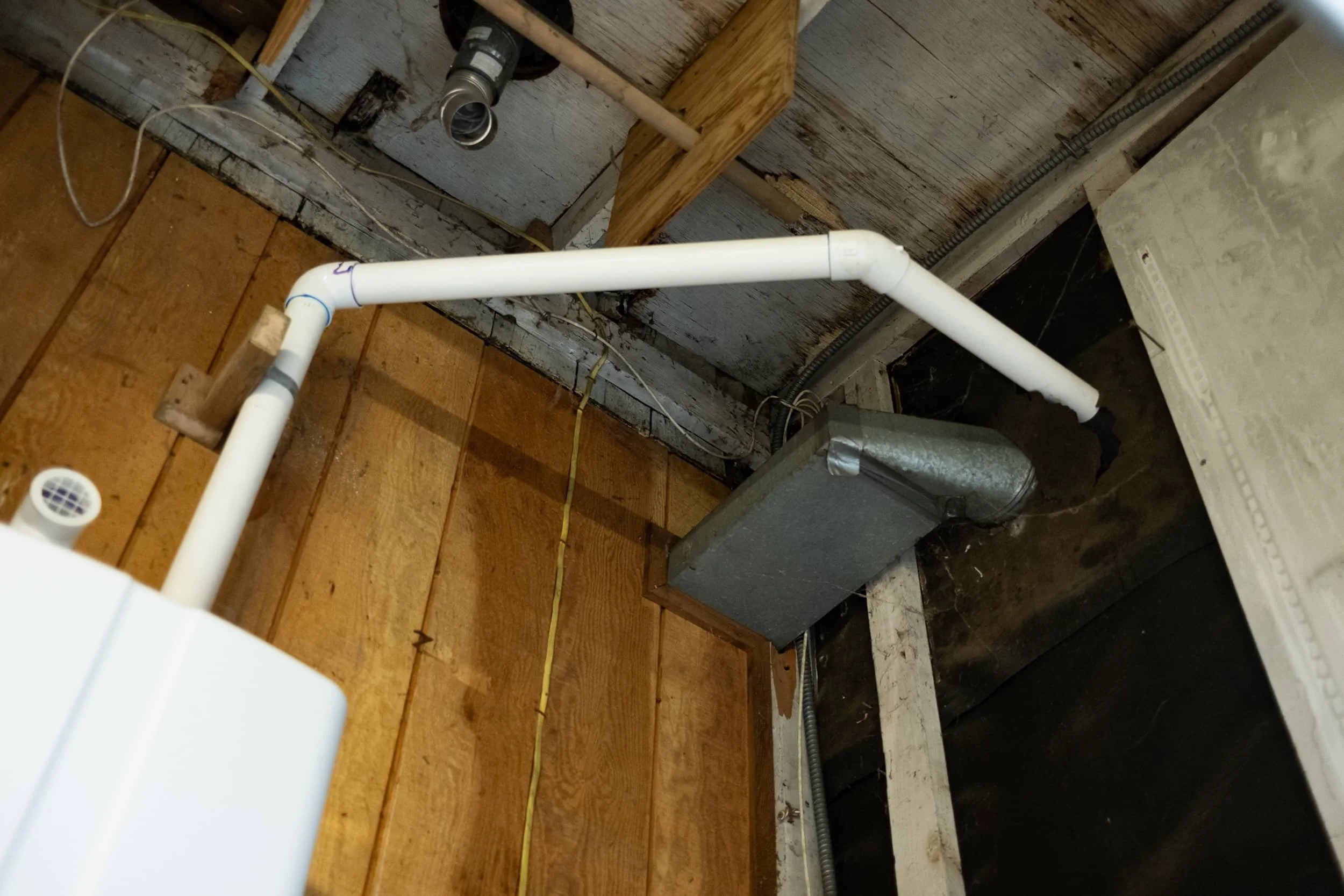
New venting ($300-$800): Tankless units require Category III stainless steel venting or PVC venting (depending on the model). Your old vent pipe probably won’t work.
A good plumber will assess all this during the estimate and explain exactly what your home needs. Don’t let anyone surprise you with these costs after the fact.
3. Hard Water Requires Annual Maintenance
King County has hard water in some areas. Hard water contains dissolved minerals (mainly calcium and magnesium) that build up inside tankless heat exchangers, reducing efficiency and eventually causing failure. You can look up your area’s water quality on most local government websites. Here are Issaquah’s reports, for example.
The fix is annual maintenance, which involves flushing the system with a solution to remove mineral buildup. A plumber charges a few hundred dollars for this service, or you can DIY it by purchasing supplies.
Tank water heaters also suffer from mineral buildup, but the larger water volume makes them more forgiving if you skip maintenance. Tankless systems are less tolerant. If you’re the type who never maintains anything, tankless might frustrate you.
4. Undersized Units Can’t Handle Peak Demand
If four people simultaneously use hot water (showers, dishwasher, washing machine), an undersized tankless unit will struggle to maintain temperature. You’ll get lukewarm water instead of hot.
This is why proper sizing is so critical. An experienced plumber calculates your household’s peak demand based on the number of bathrooms, occupants, and simultaneous usage patterns. Very large homes or high-demand situations might need two tankless units.
5. Electric Tankless Requires Serious Power
Whole-house electric tankless water heaters need 100-150 amps of electrical capacity. Some older homes have 100-amp electrical service total, meaning you’d need a full panel upgrade ($2,000-$4,000) just to support the water heater.
This is why gas tankless systems are far more common in King County. Gas provides higher flow rates at lower operating costs and is simpler to install. We typically install electric tankless units only for point-of-use applications (a single sink or shower), homes without natural gas access, or additions where running gas lines isn’t practical.
When Switching to Tankless Actually Makes Sense
Your current water heater is 8+ years old. Tank heaters typically last 10-12 years. Once yours hits 8+ years old, start planning a replacement. Waiting for catastrophic failure usually means emergency replacement without time to research options or secure rebates. You’ll make a better decision when you’re not stressed about a flooded garage.
You frequently run out of hot water. Large families, homes with teenagers, or houses with multiple bathrooms benefit most from endless hot water. If you’re currently managing shower schedules or rationing hot water, tankless water heaters solve that problem permanently.
You want lower utility bills. Saving $100-$200 annually might not sound dramatic, but over 20 years,that’ss $2,000-$4,000 back in your pocket. If you’re staying in your home long-term, the math works.
You’re already remodeling or adding bathrooms. If you’ve got walls open for other plumbing work, it’s the perfect time to upgrade to a tankless system. The infrastructure upgrades (gas lines, venting, electrical) are easier and cheaper when you're already doing construction.
Your water heater is in a living space. If your tank is in a bedroom closet, hallway, or living area, replacing it with a compact wall-mounted tankless unit reclaims space and eliminates flood risk where it matters most.
You plan to stay in your home 5+ years. Tankless is a long-term investment. If you're staying put, you'll benefit from energy savings, reliability, and not having to replace it twice. If you're selling soon, spend less on a quality tank heater and call it a day.
When You Should Just Stick With a Tank Water Heater
Budget is your primary concern. If minimizing upfront cost matters most and your water heater is in a low-risk location (not above living spaces), a quality tank water heater costs $1,500 to $2,500 less to install.
Your home lacks gas or needs major electrical upgrades. Homes without natural gas access face high operating costs, whether with electric tankless units or expensive gas line extensions. Homes with insufficient electrical service might need $3,000+ panel upgrades. Sometimes it's just not worth it.
You have very hard water and won’t maintain the unit. If you’re unwilling or unable to perform annual maintenance, hard water can quickly damage a tankless heat exchanger. Tank water heaters tolerate neglect better.
You’re selling soon. If you’re moving within 1-3 years, install a basic tank water heater unless tankless water heaters significantly increase your home’s resale value in your specific market.
So... Is Switching to Tankless Right for You?
For most Issaquah and Snoqualmie homeowners, tankless water heaters offer the exciting benefits of endless hot water, real energy savings, twice the lifespan of tank heaters, and minimal flood risk. Rebates help offset the higher upfront cost, and if you’re staying in your home, the math usually works out in your favor.
Ready to explore tankless?
We provide in-home assessments where we’ll calculate your actual hot water demand, assess which upgrades you’d need, and provide a detailed estimate for both tankless and tank options. No pressure, just honest recommendations based on your situation.