7 Signs Your Sewer Line Needs Replacement (Not Just Cleaning)
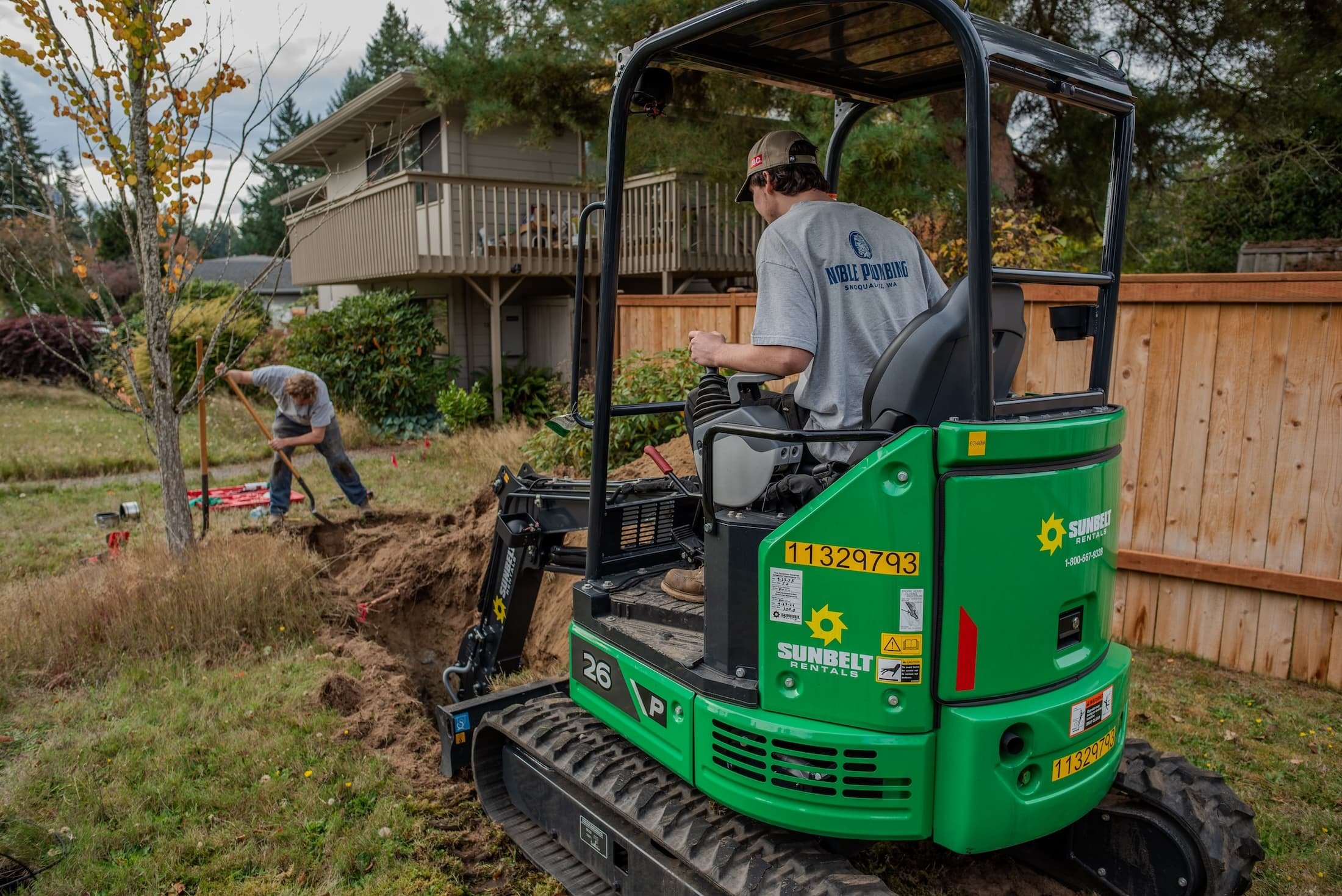
There’s a big difference between a clogged drain and a failing sewer line.
One can be cleared with a snake or hydro jetting. The other needs to be replaced, and ignoring it just makes the problem worse and more expensive.
We’ve responded to many of the sewer line emergencies across Issaquah, Snoqualmie, and Fall City over the years. Homeowners usually call us after a plumber has been out once or twice to “fix” recurring backups. By then, they’ve spent money on temporary solutions when what they actually needed was a permanent one.
Here’s how to tell whether you’re dealing with a simple clog or a sewer line that’s reached the end of its life.
1. The Same Problem Keeps Coming Back
A Pattern can look like this.
Your main sewer line backs up. You call a plumber. They snake or hydro jet the line. Everything works fine for 3-6 months. Then it happens again.
If you’re calling a plumber more than once a year for the same sewer line backup, you’re not dealing with random clogs; you’ve likely got a damaged pipe.
What’s Actually Happening
The drain cleaning is working temporarily because it’s clearing roots, debris, or buildup from inside the pipe. But the underlying problem, cracks in the pipe that let roots in, separated joints, bellies where waste collects, isn’t getting fixed. So the backup keeps recurring.
Drain cleaning is a tool for clearing clogs. It’s not a solution for broken pipes.
If you’ve had your main sewer line cleared twice in the past year, the next step is a camera inspection to see what’s actually causing the recurring problem.Industry best practices from the Plumbing-Heating-Cooling Contractors Association recommend video camera inspection for any recurring drain issues.
2. Multiple Drains Throughout Your House Are Slow at the Same Time
One slow drain is a localized clog, maybe hair in the bathroom sink or grease buildup in the kitchen drain. But when your kitchen sink, shower, and toilet are all draining slowly at the same time, the problem is in your main sewer line, not individual drains.
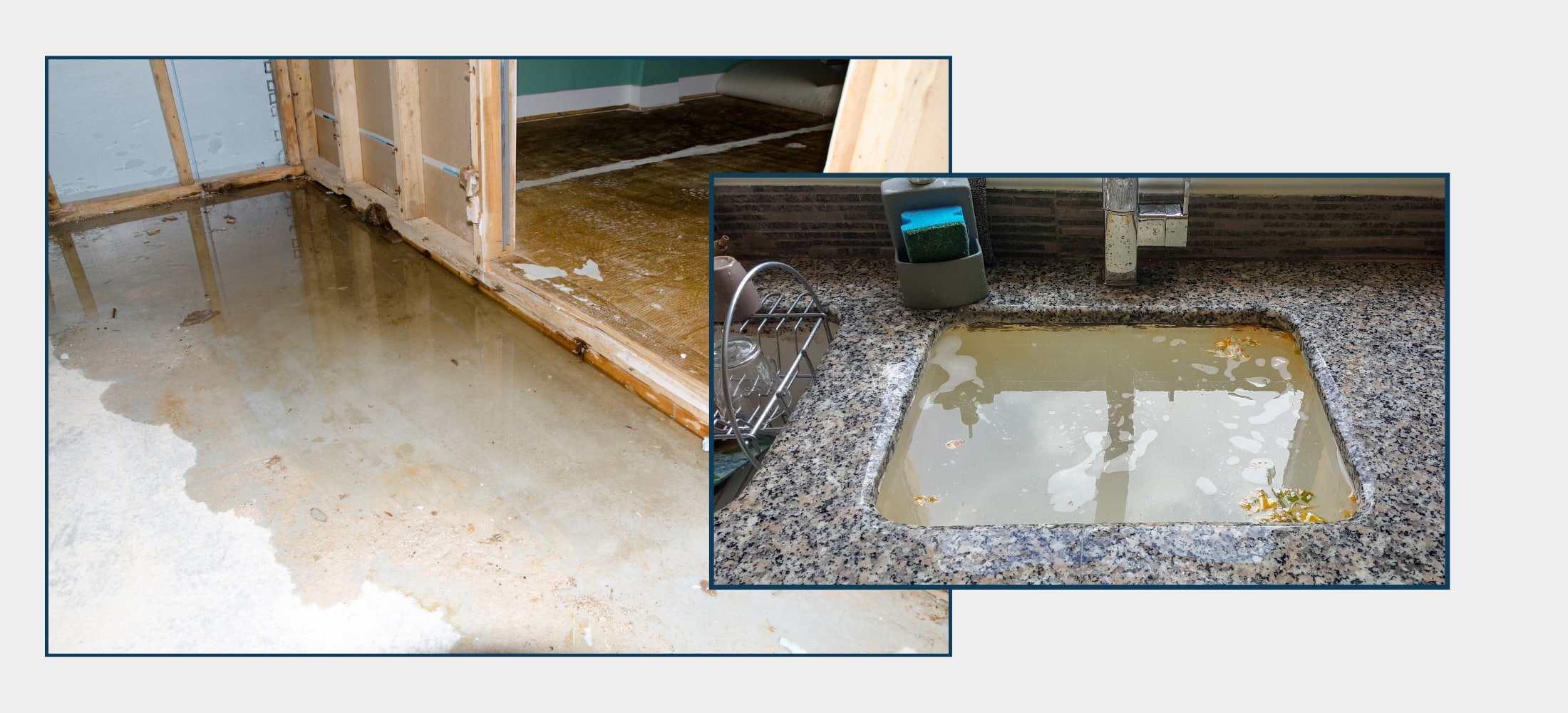
Here’s the Tell
Run water in your kitchen sink and watch what happens to your toilet. If the toilet water level rises or you hear gurgling sounds, your main sewer line is partially blocked or damaged.
This happens because when the main line can’t drain properly, wastewater backs up to the lowest point in your plumbing system, which is usually a basement floor drain or first-floor toilet.
What Causes This:
Collapsed or severely cracked sewer pipe restricting flow
Root intrusion is creating partial blockages
Bellies (sags) in the sewer line where waste collects
Separated pipe joints allow soil intrusion
If multiple drains are affected, it’s not a drain problem; it’s a sewer line problem.
3. You’re Seeing (or Smelling) Sewage in Your Yard
This is the clearest sign you’ve got a broken sewer line: sewage leaking into your yard.
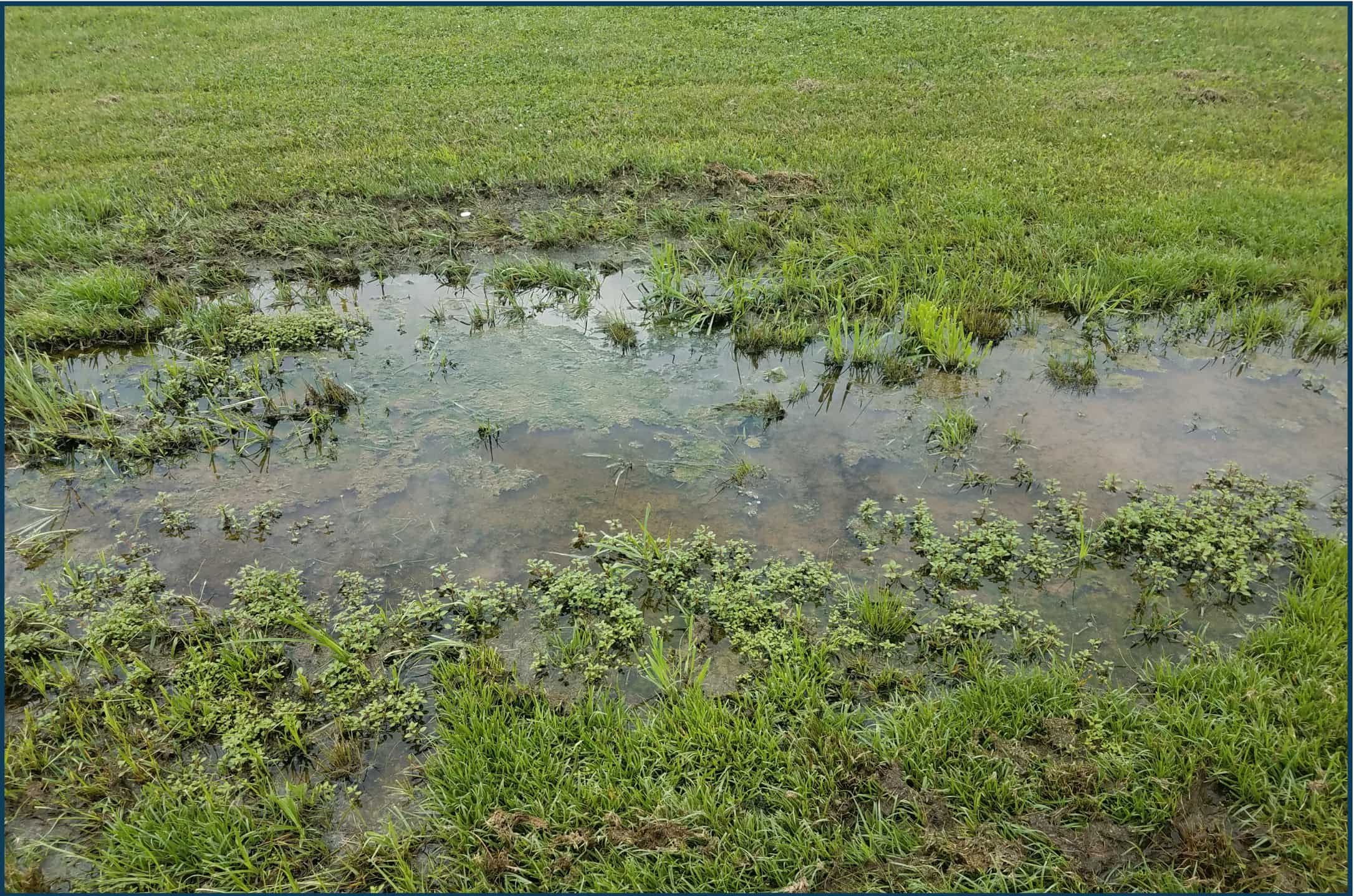
What It Looks Like
Persistently soggy areas in your yard with no sprinkler head nearby
Patches of grass that are suddenly greener and growing faster than the surrounding areas (sewage acts as fertilizer, unfortunately)
Sunken areas or small sinkholes forming above your sewer line path
Foul sewage smell outside your home, especially near the foundation or property line
When your sewer pipe cracks or separates, wastewater leaks into the surrounding soil instead of flowing to the city sewer main. Over time, this creates wet spots, erosion, and an obvious odor.
Why this matters beyond the smell:
Sewage in your soil is a health hazard. According to theWashington State Department of Health, sewage contamination poses serious risks to groundwater quality and public health. It also attracts pests and can undermine your home’s foundation if the leak is close enough. This isn’t something you can wait on.
If you’re seeing or smelling sewage in your yard, you need a camera inspection immediately to locate the break.
4. Your Home Was Built Before 1980 and Still Has Original Pipes
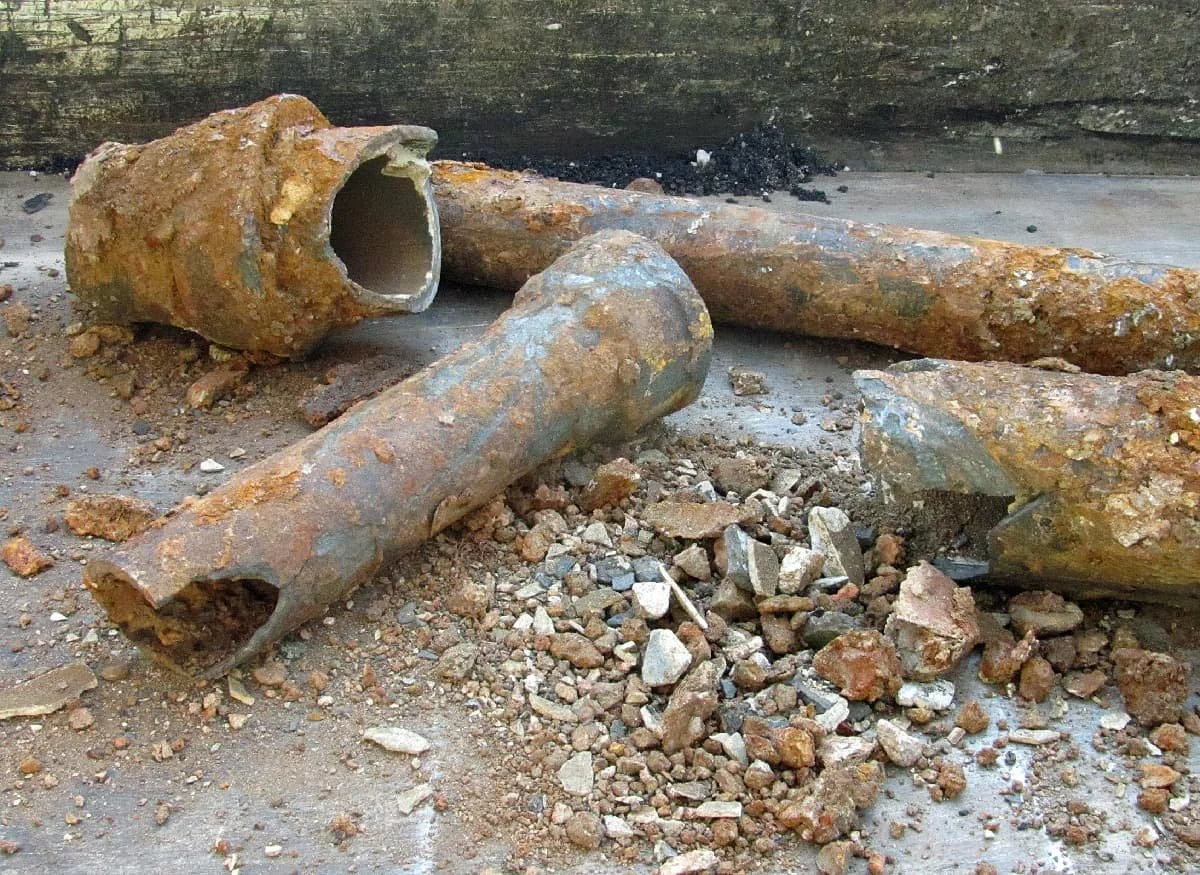
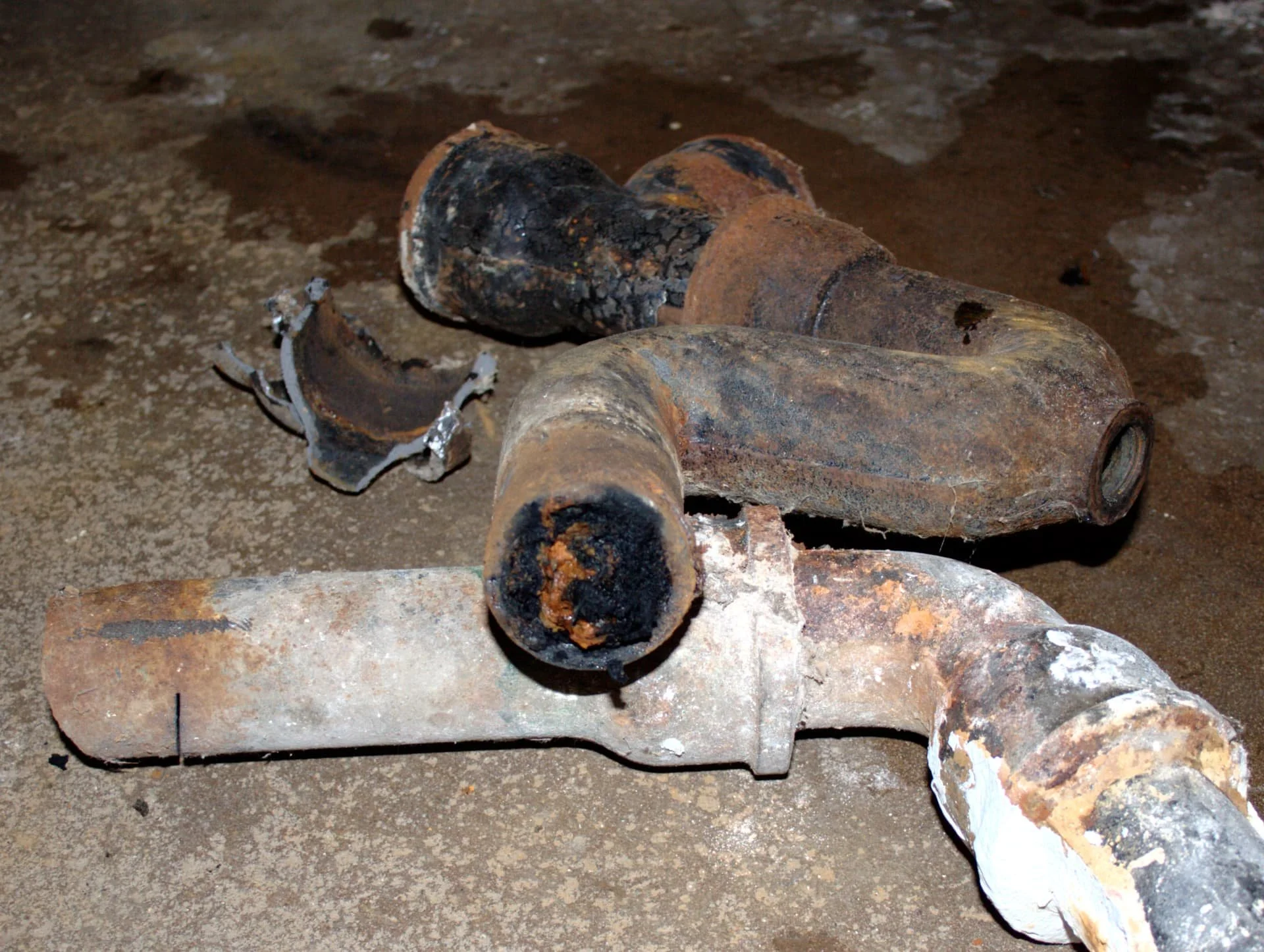
This one’s less obvious because nothing has failed yet, but if your home is 40+ years old and still has its original sewer line, it’s worth investigating. Sewer pipes don’t last forever. The materials used in older homes have predictable lifespans. In our work throughout Issaquah, Snoqualmie, and Fall City, we regularly encounter:
Clay pipes (common in homes built 1950s-1970s) - According totechnical standards from the International Association of Plumbing and Mechanical Officials, vitrified clay pipes typically last 50-60 years before joints separate and pipes crack.
Cast iron (common 1950s-1980s) - TheCast Iron Soil Pipe Institute documents that cast iron pipes generally provide 50-75 years of service before corrosion causes failure.
Orangeburg pipe (fiber conduit used 1950s-1970s) - This material, manufactured from wood pulp fibers bound with coal tar pitch, typically deteriorates within 30-50 years. Industry documentation shows widespread failures of Orangeburg pipe in homes from this era.
If your home was built in 1978 and you’ve never replaced the sewer line, you’re working with a pipe that’s past its expected lifespan.
The Problem With Waiting
Sewer lines don’t usually fail all at once. They deteriorate gradually, small cracks turn into separated joints, minor root intrusion becomes complete blockages, and hairline fractures become collapses.
If you wait until you have an emergency backup on a Saturday night, you’re paying emergency rates and dealing with sewage in your house while we schedule the work.
The Smarter Approach
If your home is 40+ years old, get a camera inspection before problems start. If we find early-stage damage, you can plan the replacement on your timeline instead of dealing with an emergency.
5. You’ve Got Large Trees Within 50 Feet of Your Sewer Line
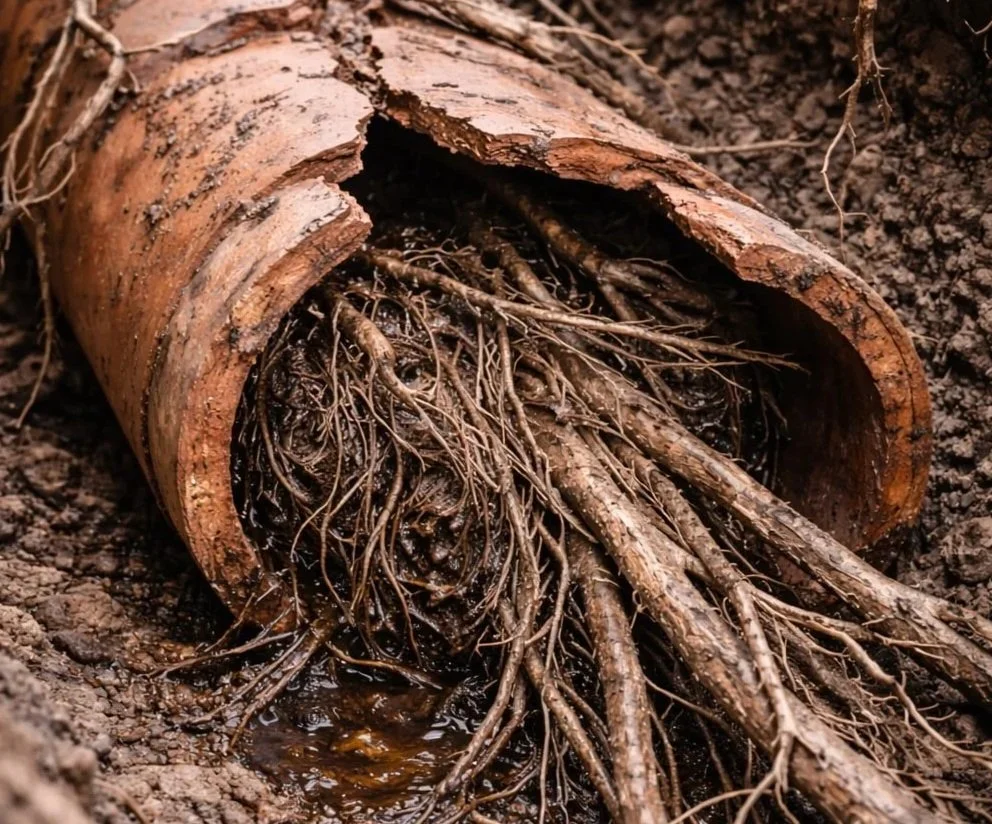
Tree roots and sewer lines are natural enemies. Roots grow toward moisture and nutrients. Your sewer line is literally a pipe full of water with trace nutrients from waste. Once roots find even a hairline crack or joint separation, they infiltrate the pipe and expand.
Trees that cause the most problems in King County:
Based on inspections throughout King County, the tree species most commonly associated with root intrusion in our area are
Maples (extremely common in Issaquah and Snoqualmie)
Willows
Poplars
Cottonwoods
Birch
Alders
If you’ve got any of these within 50 feet of your sewer line path (usually from your house to the street or property line), there’s a high probability that roots have already found your pipe (especially if it’s older than 30 years).
What Happens When Roots Get In
First, they create partial blockages that cause slow drains and recurring backups. Then they expand, cracking the pipe further. Eventually, they can completely crush clay or Orangeburg pipes.
You’ll know you have a root intrusion when
Backups happen seasonally (spring and fall, when roots are most active)
Drain cleaning works temporarily, but problems return within months
Camera inspection shows roots inside the pipe
Can you just keep clearing the roots?
Yes, temporarily. We can hydro jet or mechanically cut roots to restore flow. But roots grow back. Usually within 6-12 months. If roots have infiltrated your pipe, the pipe is damaged. Clearing roots addresses the symptom, not the cause.
At some point, replacement makes more financial sense than paying for annual root clearing.
6. Your Toilet Gurgles When You Run Water Elsewhere in the House
This is one of those sounds homeowners ignore until it becomes a bigger problem.
What It Sounds Like
You run the washing machine or shower, and your toilet gurgles or bubbles. Or you flush one toilet and hear gurgling from a different bathroom.
What’s causing it:
Gurgling happens when air is being pushed through your plumbing system because water can’t drain properly. This usually means:
Your main sewer line is partially blocked
There’s a clog further down the line, creating a vacuum
Your sewer line has damage (cracks, separated joints, bellies) that’s allowing air to enter the system
In a healthy plumbing system, wastewater drains smoothly, and vent pipes allow air to circulate without creating pressure. Gurgling means that the balance is off.
Gurgling is an early warning sign. It means you’ve got a partial blockage or damage that’s restricting the flow, but your sewer line hasn’t failed yet.
If you address it now, you might catch the problem before it becomes a full backup with sewage coming up through floor drains or toilets.
7. A Camera Inspection Already Showed Damage You’ve Been Ignoring
Sometimes homeowners get a sewer camera inspection, see that there’s damage, and decide to “wait and see” if it gets worse before replacing the line. The challenge is that sewer line damage is progressive; it doesn’t improve on its own.
Sewer Line Damage Doesn’t Heal Itself
Cracks get bigger
Separated joints shift further apart
Root intrusion expands
Bellies collect more debris and sediment
Corrosion spreads
In our experience, damaged sewer lines don’t spontaneously improve. The question isn’t whether it will fail, it’s when, and whether you’ll be able to plan for it or if it’ll happen as an emergency.
What people are usually waiting for:
They’re hoping the damage is minor enough that they can squeeze a few more years out of the existing pipe before paying for replacement.
That’s understandable; sewer line replacement is expensive. But the reality is that:
Planned replacement on your timeline: You get estimates, compare options, schedule work when convenient, and potentially choose trenchless methods to protect your property
Emergency replacement: You’re paying emergency rates, taking the first available plumber, dealing with sewage backup and cleanup costs, and possibly facing more expensive traditional excavation because there’s no time for trenchless planning

If a camera inspection has already shown serious damage, collapsed sections, severe root intrusion, multiple cracks, or separated joints, replacement will likely be necessary at some point. The advantage of addressing it proactively is having more control over timing and approach.
What to Do If You’re Seeing These Signs
If you recognize 2-3 of these warning signs, the next step is a camera inspection.
We’ll send a high-definition camera through your sewer line to show you exactly what’s happening. You’ll see the condition of your pipe, where damage is located, and whether you’re dealing with something repairable or something that needs replacement.
The inspection tells us:
Type and severity of damage
Location of problem areas
Whether your pipe is a candidate for trenchless replacement
Realistic timeline before failure if you choose to wait
With Noble Plumbing, you’ll get honest recommendations based on what we actually see, not worst-case-scenario sales tactics.
If replacement makes sense, we’ll explain your options
Traditional excavation - Necessary in certain situations
Repair vs replacement - Sometimes spot repairs buy you time
Most sewer line problems don’t start as emergencies. They often start as minor annoyances that homeowners ignore until they become much bigger problems. Recurring backups, slow drains, gurgling toilets, and soggy yards are all early warning signs that your sewer line could be failing. Addressing these issues early, on your timeline, costs less and causes less disruption than waiting for a complete failure.
If you’re seeing any of these signs in your Issaquah, Maple Valley, Fall City, or neighboring city home, we’ll inspect your sewer line with a camera, show you what we find, and give you straightforward recommendations.
Noble Plumbing
Plumbers Serving Issaquah, Snoqualmie & King County
LICENSED, BONDED, & INSURED. #NOBLEPL772BE