
What Is Hydrojetting? A Plain Guide to High-Pressure Drain Cleaning
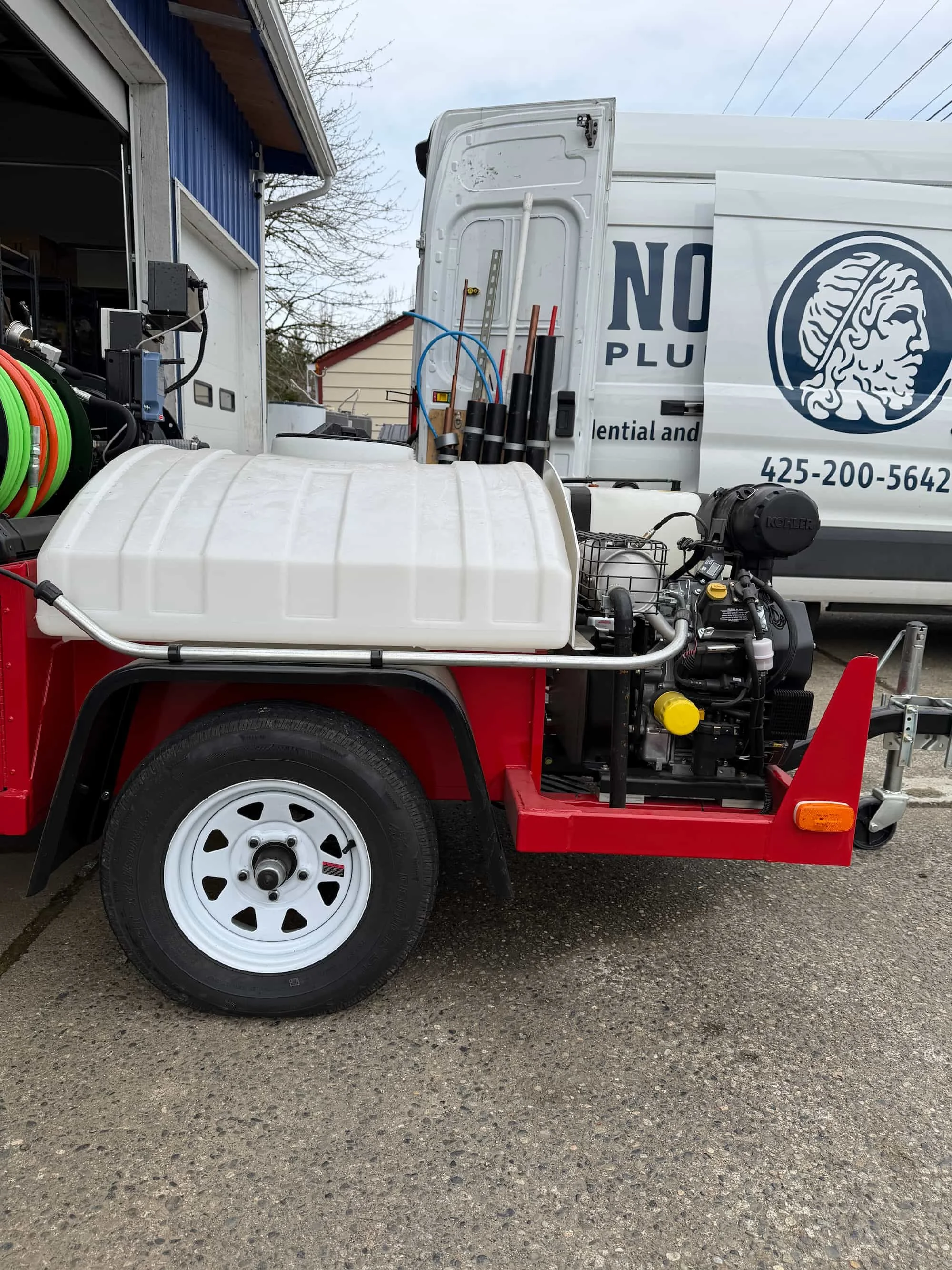
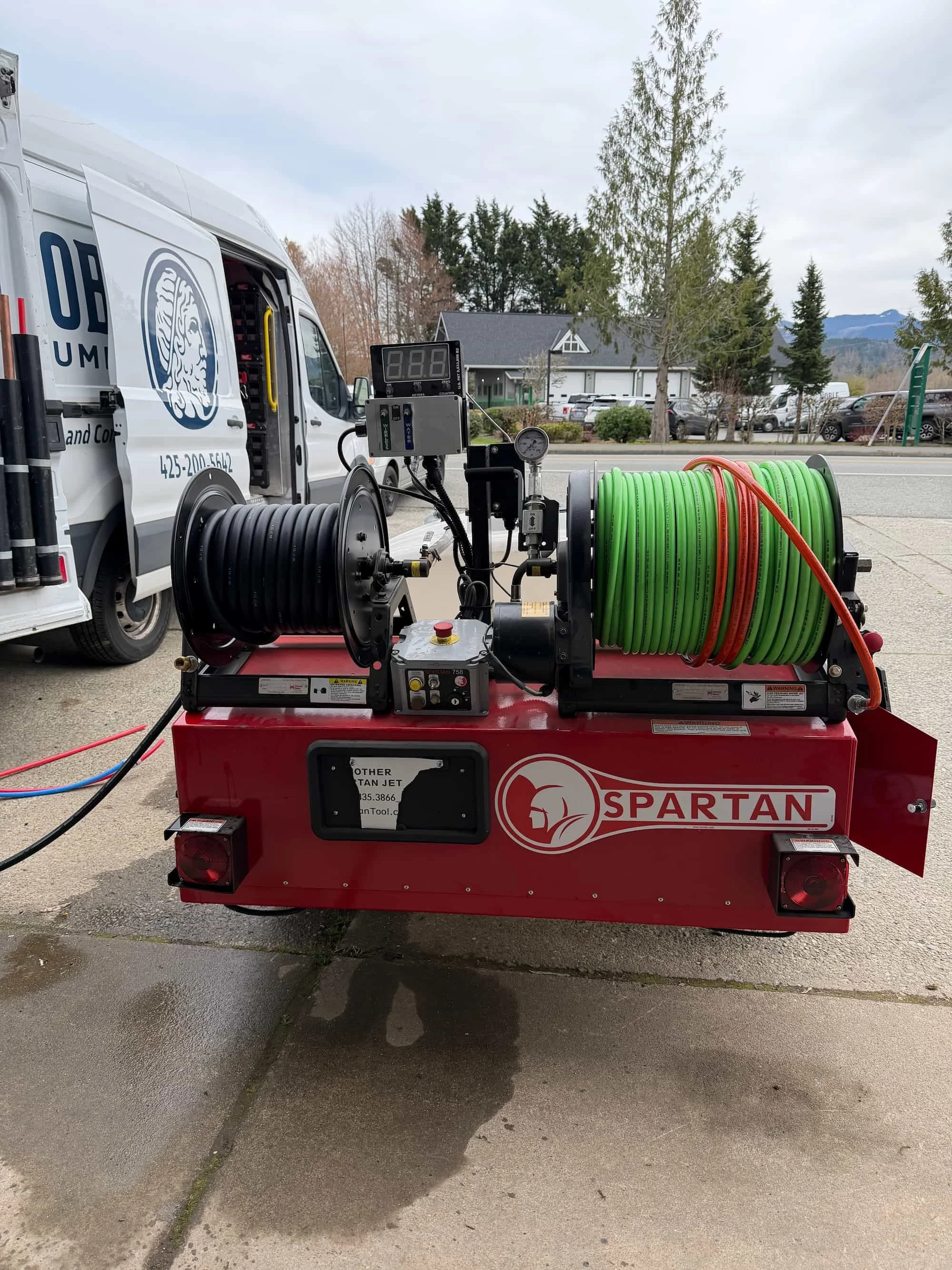
Most hydrojetting calls begin with a frustrated homeowner tired of repeated drain snaking and recurring clogs.
It keeps coming back for the same reason. The pipe hasn’t clogged suddenly; instead, it’s been narrowing inside for years, coated with grease, mineral scale, or tree roots that entered through a crack deep underground. A snake punches a hole through the buildup, restoring flow for a while, but the buildup remains.
Hydrojetting removes buildup completely. Here’s how it works, when it’s effective, and when it isn’t.
What Hydrojetting Is
Hydrojetting is exactly what it sounds like: a stream of pressurized water, run through a specialized nozzle, that scours the inside of a drain or sewer line. The nozzle uses both forward and reverse jets, allowing it to pull itself down the line while blasting the pipe walls clean in a full 360-degree pattern.
Residential jetting runs between 1,500 and 4,000 PSI. Commercial work uses higher pressure, depending on the line and buildup. Restaurants, salons, and buildings with kitchens usually need higher pressure to cut through the buildup coating the inside of the pipe.
What sets hydrojetting apart is what it leaves behind. A snake (also called an auger, a flexible tool used to bore through pipe clogs) simply punches a hole in the clog to restore partial flow, which works for hair, paper towels, or stuck food. Hydrojetting, on the other hand, thoroughly scrubs the inside of the pipe with high-pressure water, similar to a driveway pressure washer. This process actually solves the underlying problem, rather than just buying you a few months.
When Hydrojetting Is the Right Call
Recurring clogs in the same pipe
If you’ve had the same drain snaked more than once in a year, you don’t have a clog; you have buildup that keeps regrowing or never leaves. This is one of the most common reasons we run a jetter in homes around Maple Valley, Carnation, Snoqualmie, and Issaquah. The cost math is also better than people assume. A snake is cheaper per visit, but if you’re paying for one twice a year for three years, you’ve outspent a single hydrojetting service that would have lasted longer than all of them combined.
Tree roots in the line
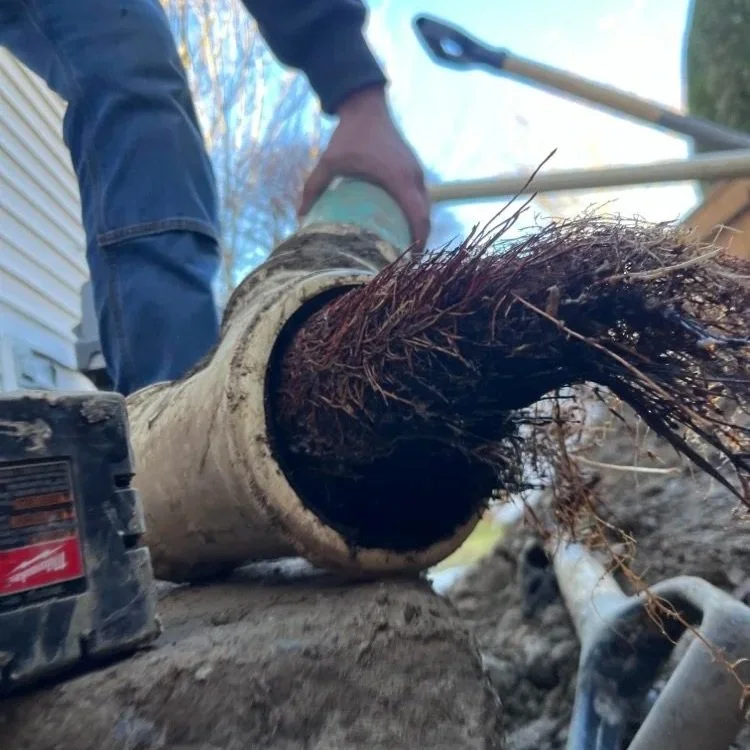
Tree roots are common in East King County. Maples, cedars, and Douglas firs often find their way into old sewer pipes, creating a net that catches debris. A snake cuts a channel but leaves the root mass, which regrows quickly.
A jetter actually flushes out root material, providing a clean baseline to work from.
King County’s wastewater division notes that the side sewer is the homeowner’s responsibility to maintain.
Grease and food solids in a kitchen line
Clogged lines due to grease and food debris are common in commercial establishments, but some homes experience them as well. Fats, oils, and grease harden on pipe walls and trap food particles, reducing the pipe’s usable diameter. No snake can fully deal with that. Hydrojetting cuts the grease layer off and washes it down to the main. For local restaurants, this proactive maintenance prevents costly backups.
When Hydrojetting Is the Wrong Call
Hydrojetting is a powerful tool, which means it can also cause damage if used on a pipe that can’t handle it. The pressures that scour clean cast iron and PVC will absolutely make a bad day worse on a pipe that’s already failing.
It is not recommended to run a jetter on:
Orangeburg pipes
If your home was built between roughly 1945 and 1972, there’s a real chance your sewer line is an Orangeburg pipe, which is made from layers of compressed wood pulp and pitch. Orangeburg was sold as an inexpensive alternative to clay and cast iron. It deforms by losing its shape and delaminates, meaning it separates into layers, with age. High-pressure water will collapse it. Orangeburg pipes should be replaced, not cleaned.
Severely corroded cast iron
Cast-iron sewer lines are common in homes built from the early to mid-1900s through the 1980s. Once the pipe walls are pitted and thin, jetting can blow through them.
Cracked, offset, or partially collapsed pipe
If the pipe is structurally compromised, the goal is repair (or replacement, or trenchless repair), not cleaning.
Sections where a camera can’t confirm pipe material or condition
A proper hydrojetting job often starts with a sewer camera inspection. This lets us identify pipe material, joints, roots, and structural damage to decide whether jetting is appropriate before starting.
Hydrojetting vs. Snaking
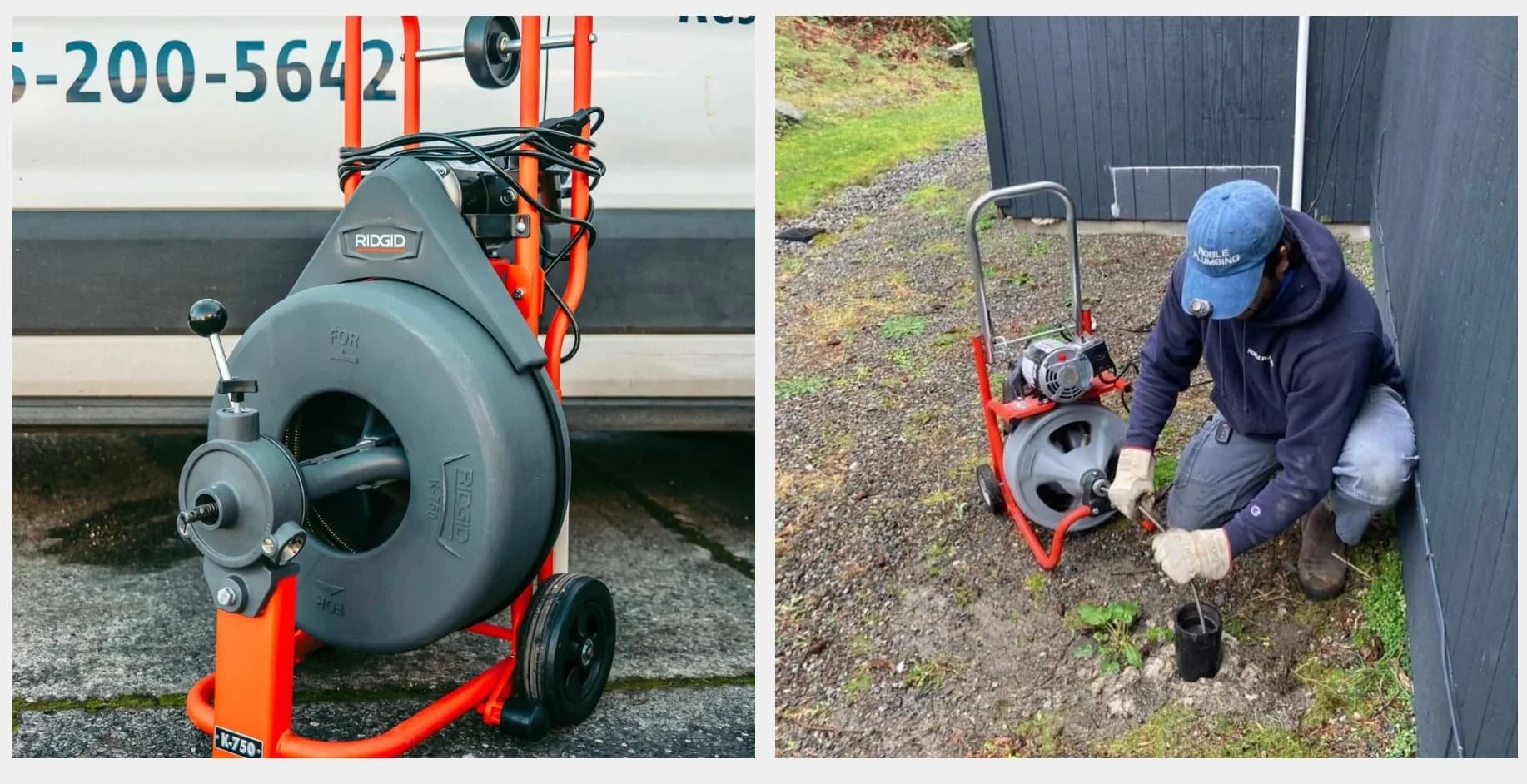
For a single, localized clog (a toilet that won’t flush, a tub that won’t drain), a snake is faster, cheaper, and the right tool. There’s no reason to bring a jetter to a hair clog in a bathroom sink.
For anything systemic like recurring backups, roots, grease, mineral scale, and decades of buildup, that’s where a snake is a temporary fix. It won’t keep you out of the same call three months later. Hydrojetting addresses the cause, which is why we recommend it for recurring issues.
A useful rule of thumb: if you’ve had the same line snaked more than twice, the next call shouldn’t be another snake.
A Note on Pacific Northwest Homes
Many areas, like Carnation andMaple Valley, are among the densest areas of tree cover in our service area, with bigleaf maples and Douglas firs on older properties sending roots over decades in search of the easiest moisture: usually an old side sewer with a hairline joint gap. Snoqualmie, Issaquah, and Fall City follow close behind. If your backyard canopy is older than your roof, you’re likely a candidate for root intrusion.
The housing stock matters too. East King County has seen waves of development since the early 1900s, and we still see clay pipe in older neighborhoods, cast iron in mid-century homes, and Orangeburg in other homes. The pipe under your yard is often older than the bathroom you’re standing in.
Then there’s the rain. Wet soil shifts, joints separate, and the warm, oxygen-rich inside of a sewer pipe becomes the most attractive thing in a saturated yard.
Not every home requires jetting, but sewer lines in this part of Washington need more frequent inspection than those in drier regions.
What the Process Actually Looks Like
When we run a hydrojetting service, here’s the order of operations on a typical residential job:
Camera inspection first if needed
We send a camera down the line through a cleanout to see what we’re working with.
Diagnosis
If the line is in good enough shape to jet, we tell you what we’re seeing. If it isn’t, we tell you that too, and we talk through repair or replacement options.
Jetting
We match the pressure to the pipe, run the nozzle from the cleanout out toward the main, and flush the line.
Camera check after
We often rerun the camera to confirm the line is clean and to provide you with a record of what the pipe looks like after.
For commercial customers, the cadence is usually different. A restaurant kitchen line typically benefits from jetting on a regular schedule, somewhere between every six months and once a year, because the grease load never stops. Residential lines are usually fine for two to three years between cleanings, sometimes longer, depending on tree exposure and pipe material.
What It Costs
The right comparison isn’t snake vs. jet on a single visit. It’s one jetting service cost versus the next two or three snake visits you’d otherwise pay for, plus any water damage from backups between them.
Commercial pricing depends heavily on line size, accessibility, and how often the work needs to happen. For most kitchens we service in Issaquah, Maple Valley, and Snoqualmie, a maintenance schedule costs less per year than emergency call-outs and keeps the restaurant open.
When to Call
A few signs are worth taking seriously:
You’ve snaked the same drain twice in the last year.
You have mature trees over the sewer line.
You run a commercial kitchen and haven’t had a line cleaning in a while.
At Noble Plumbing, we work throughout East King County, with a particular focus on Carnation, Maple Valley, Snoqualmie, Issaquah, North Bend, Fall City, Sammamish, Bellevue, and Mercer Island. We’ll send a camera down before we send a jetter down, and we’ll tell you what the pipe actually needs, not what costs the most to install.
